logo
Nachricht senden
Shenzhen Ofeixin Technology Co., Ltd
Über uns
Ihr Berufs- u. zuverlässiger Partner.
QOGRISYSengagiert sich professionell dafür, Kunden umfassende IoT-Verbindungslösungen anzubieten.Das Unternehmen konzentriert sich auf die Kommunikationsbranche.Nach jahrelanger Erfahrung im Branchenmarkt und im Kundenservice hat es den Mut, sich extremen technischen Herausforderungen zu stellen und Kunden bei der Lösung von Schwierigkeiten zu helfen.Das Unternehmen verfügt über hochwertige unterstützende Ressourcen von Breitband-Nahbereichs-Funkverbindungen, Weitverkehrsnetz-Mobilfunkkommunikat...
Mehr erfahren

0

Jahr der Gründung

0

Million+
Angestellte

0

Million+
Kunden bedient

0

Million+
Jahresumsatz
CHINA Shenzhen Ofeixin Technology Co., Ltd Hohe Qualität
Vertrauenssiegel, Bonitätsprüfung, RoSH und Beurteilung der Lieferfähigkeit. Das Unternehmen verfügt über ein strenges Qualitätskontrollsystem und ein professionelles Testlabor.
CHINA Shenzhen Ofeixin Technology Co., Ltd Entwicklung
Internes professionelles Designteam und Werkstatt für fortgeschrittene Maschinen. Wir können zusammenarbeiten, um die Produkte zu entwickeln, die Sie brauchen.
CHINA Shenzhen Ofeixin Technology Co., Ltd Herstellung
Fortgeschrittene automatische Maschinen, streng verfahrenskontrollierendes System. Wir können alle elektrischen Endgeräte herstellen, die Sie brauchen.
CHINA Shenzhen Ofeixin Technology Co., Ltd 100% Dienstleistung
Großhandels- und kundenspezifische kleine Verpackungen, FOB, CIF, DDU und DDP. Lassen Sie uns Ihnen helfen, die beste Lösung für all Ihre Sorgen zu finden.

Qualität Wifi7-Modul & Wifi HaLow Modul Hersteller

Finden Sie Produkte, die verbessern, Ihre Bedingungen zu erfüllen.
Fälle u. Nachrichten
Die spätesten brenzligen Stellen.
Dieses High-Tech-Modul O9201SB revolutioniert die Unterhaltung im Heim mit einem vollständigen Upgrade!
Es ist spät in der Nacht und du bist mitten in deiner Lieblingsshow, als plötzlich der Bildschirm in eine Diashow einfriert.Stören diese frustrierenden Netzwerkprobleme Ihr Smart Home-Erlebnis?Mach dir keine Sorgen!Qogrisys hat ein hochmodernes Modul mit **Wi-Fi 6 + BT5.4** entwickelt- Ich weiß.O9201SB¢die die Set-Top-Box-Industrie mit einem beispiellosen "Erlebnis-Upgrade" ruhig revolutioniert! 1Die Schmerzpunkte von Heimunterhaltung: Ist Ihr Set-Top-Box wirklich "smart"? Mit dem Aufstieg von 4K/8K Ultra-High-Definition-Videos, Cloud-Gaming und Smart-Home-Geräten stehen Heimnetzwerke unter enormem Druck: "Ein Netzwerk, mehrere Geräte" führt zu Verzögerungen**: Wenn der Fernseher, Telefon, Tablet und der Smart Speaker alle online sind, kann Wi-Fi 4/5 einfach nicht mithalten!   High-Definition-Videos werden zum "Mosaik"**: 8K-Videos benötigen mehr als 100 Mbps Bandbreite pro Sekunde, und traditionelle Module haben Schwierigkeiten, diese zu liefern.   Hohe Kosten für Kernchips**: Die Anpassung ist komplex und teuer, was die Hersteller frustriert.   2EinführungO9201SB: Wi-Fi 6 + BT5.4 definiert "Glatt" neu 1Geschwindigkeitssteigerung: Instant 8K Video Streaming Dual-Band Simultaneous Technology**: 2,4 GHz für eine stabile Wanddurchdringung, 5 GHz für schnelle Geschwindigkeiten, mit 2T2R-Geschwindigkeiten von bis zu 1200 Mbps.mit null Buffern beim Ziehen der Fortschrittsleiste! MU-MIMO + OFDMA**: Mehrere Geräte können sich gleichzeitig verbinden, ohne um Bandbreite zu konkurrieren. 2- Bluetooth 5. - Was ist das?4: Eröffnung neuer intelligenter Möglichkeiten Bluetooth-Fernbedienung mit sofortiger Antwort**: Genießen Sie eine empfindlichere Sprachsteuerung und eine nahtlose Bedienung. Verbinden Sie externe Lautsprecher und Game Controller mit Null-Latenz**: Tauchen Sie ein in ein vollständig immersives Spielerlebnis.   3Führende Technologie + hochwertiger Service: Ein Win-Win für Hersteller und Nutzer 1. Selbstbewusst und sicher, um vollständige Sicherheit zu gewährleisten Die Chips entsprechen internationalen technischen Normen und gewährleisten Stabilität und Sicherheit. Datenverschlüsselung + lokalisierte Server bieten einen umfassenden Datenschutz. 2- Flexibile Anpassung, schnelle Reaktion Ein professionelles Forschungs- und Entwicklungsteam unterstützt die "tiefe Anpassung", indem die Anpassung vom Design bis zur Massenproduktion in nur 30 Tagen abgeschlossen wird. Eine optimierte Lieferkette reduziert die Kosten um 20% und verkürzt die Lieferzyklen um 50%.   4Die Zukunft ist da: Das "Goldene Tor" zu intelligenten Häusern Für Nutzer:O9201SBEs bietet ein nahtloses und reibungsloses Erlebnis.¢ ist ein leistungsfähiges Instrument zur Kostensenkung und Effizienzsteigerung.Set-top-Boxen mit diesem Modul können nicht nur das Zentrum der Unterhaltung zu Hause, sondern auch nahtlos mit Smart Home-Geräte integrierenDies versetzt sie in die Lage, das Kernportal zum Billionen-Dollar-Smart-Home-Markt zu erobern!     Von "nutzbar" zu "exzellent" und von technologischer Abhängigkeit zu technologischer FührungO9201SBModul entwickelt vonQogrisys Das Unternehmen hat die Regeln der Set-Top-Box-Industrie mit seiner hervorragenden Leistung und seinem hochwertigen Service neu geschrieben.O9201SBistDie Wahl eines Moduls ist nicht einfach, sondern eine zukunftsorientierte "Erlebnisrevolution".  
O9201UB Aktueller Stand der Projektorindustrie: Wireless-Konnektivitäts-Schmerzpunkte bedürfen dringend eines Durchbruchs
Da Smart-Projektoren heutzutage immer häufiger verwendet werden, steigen die Anforderungen der Benutzer an Bildqualität und Funktionalität kontinuierlich.die Stabilität und Geschwindigkeit der drahtlosen Konnektivität sind zu Engpässen geworden, die die Verbesserung der Benutzererfahrung behindern: · Übertragung von 4K/8K-Inhalten Stottern: Hochauflösende Videos erfordern eine extrem hohe Bandbreite, und traditionelle Wi-Fi-Module leiden oft unter Verzögerungen und Pufferung in komplexen Umgebungen. · Schwere Interferenzen zwischen mehreren Geräten: Wenn Projektoren gleichzeitig mit mehreren Geräten wie Smartphones, Tablets und Lautsprechern verbunden sind, führt Netzwerküberlastung häufig zu Signalunterbrechungen. · Schlechte Bluetooth-Peripherie-Erfahrung: Ältere Protokolle leiden unter hoher Latenz und schwachen Anti-Interferenz-Fähigkeiten, was zu instabilen Verbindungen für drahtlose Lautsprecher, Spielcontroller und andere Geräte führt. · Konflikt zwischen Stromverbrauch und Wärmeverteilung: Bei der Hochgeschwindigkeitsübertragung wird viel Strom verbraucht, was die Lebensdauer der Batterie beeinträchtigt und sogar zu Problemen bei der Wärmeabgabe führt.       Diese Schmerzpunkte untergraben die Glaubwürdigkeit Ihrer Marke Ich...O9201UBModul: Das "drahtlose Herz" für Projektoren QOGRISYSDie Kommission hat sich seit 12 Jahren intensiv mit der drahtlosen Kommunikation befaßt.Wi-Fi 6 + Bluetooth 5.4 Dual-Mode-ModulO9201UBist mit vier Kernvorteilen konzipiert, um das drahtlose Erlebnis in Projektionsszenarien umzugestalten: 1.Wi-Fi 6 Ultra-Speed-Übertragung, 4K/8K · Simultane, intelligente Schaltungen in zwei Bands: 2,4 GHz bietet starke Wanddurchdringungsfähigkeiten, die Geschwindigkeit kann bis zu 1200 Mbps betragen, während 5 GHz, der 2T2R DBAC und 1T1R DBDC-Modus unterstützt,die gleichzeitige Nutzung verschiedener Frequenzbänder für den Internetzugang und die Bildschirmübertragung zulässtSag Abschied von Stottern. · MU-MIMO + OFDMA-Technologie: Unterstützt die Hochgeschwindigkeitsübertragung zwischen mehreren Geräten gleichzeitig und sorgt für eine stabile und reibungslose Projektion, auch wenn mehrere Benutzer das Netzwerk teilen. · Beamforming-Technologie: Genaue Position der Geräte, dynamische Steigerung der Signalstärke und Beseitigung von Projektions-Totenzonen, um eine vollständige Signalabdeckung im Wohnzimmer oder bei Konferenzen zu gewährleisten   ② Bluetooth 5.4 + Niedrige Latenz, "Null Wahrnehmung" Audio-Video-Synchronisierung · Bluetooth mit hoher Geschwindigkeit von 2 Mbps: drahtlose Lautsprecher/Kopfhörer28 ms(Industrie-Durchschnitt: 50ms), die konsertabhängige Audioeffekte mit "Audio-Video-Synchronisierung" liefern. · AFH-Anti-Störungstechnologie: Vermeidet automatisch überlastete 2.4G-Kanäle, so dass mehrere Geräte (Fernbedienung + Mikrofon + Lautsprecher) ohne Störungen nebeneinander existieren können, was eine "Sofortantwort" für die Sprachsteuerung ermöglicht. · HCI-Technologie: Bietet eine Zwischenreserve, kompatibel über Kernelversionen hinweg; USB-Schnittstelle kann sich auch mit Bluetooth-Lautsprechern verbinden, bietet erstklassige Spracheffekte, spart Debugging-Zeit,und die Verringerung des Pin-Verbrauchs in der PCM-Schnittstelle   ③ Kompakte Größe + geringer Stromverbrauch, größere Gestaltungsfreiheit · Kompakte Dimension: Ultra-kleine Größe von 15×13×2,3 mm, geeignet für ultra-dünne Projektorkonstruktionen, die den internen Platz sparen. · Intelligentes Strommanagement: Wi-Fi + Bluetooth-Kollaborations-Stromverbrauch um 20% reduziert, so dass die Betriebsdauer des eingebauten Batterieprojektors um 1,5 Stunden verlängert wird und ein ununterbrochenes Camping im Freien gewährleistet wird   4.Flexible Anpassung, einfache Integration · USB 2.0-Schnittstelle: Kompatibel mit den gängigen Projektormodellen, wodurch die Entwicklungskosten für die Hersteller gesenkt werden. · Mehrfache Zertifizierungen: Unterstützt WPA3-Verschlüsselung, BLE Audio und andere Standards, um Datensicherheit und Kompatibilität zu gewährleisten. - Ich weiß.II).Nutzen Sie jetzt den neuen blauen Ozean der "drahtlosen Projektion"! Der weltweite Markt für intelligente Projektoren wird bis 2025 80 Mrd. USD übersteigen, wobei die drahtlose Erfahrung ein wichtiger Entscheidungsfaktor für die Nutzer wird.O9201UBsind nicht nur "Viewing-Tools", sondern auchZuhause-Entertainment-Hubs, Geschäftszentren und Smart Home-Gateways. Szenarien für Heimunterhaltung: Drahtlose Spiele-Bildschirmcasting: Unterstützt 4K @ 60fps-Low-Latency-Übertragung, gepaart mit immersiven Bluetooth-Lautsprechern.Intelligente Heimintegration: Direkte Wi-Fi-Verbindung zur Steuerung von Bildschirmen/Leuchten, die ein immersives Theatersystem schaffen. Szenarien für Geschäftsbüros: Mehrgeräte-wireless Screen Sharing zwischen mehreren Geräten:Unterstützung von Demonstrationen von mehreren Endgeräten, wodurch die Effizienz von Meetings um 50% verbessert wird. Optimierung der Remote-Zusammenarbeit: QoS-intelligente Bandbreitenzuweisung sorgt für stabile Videokonferenzen Erziehungsszenarien: Online-Klassenzimmersicherung: Ein störungsfreies Design sorgt für eine reibungslose Anzeige der 4K-Kursware. Interaktive Unterrichtsunterstützung: Bluetooth-Mikrofon-Latenz < 30 ms, so dass die Lehrer-Schüler-Interaktion ohne Verzögerung möglich ist. III. Die.AuswahlO9201UBDas bedeutet, dass Sie mehr als nur ein Modul gewinnen ▶Erweiterte Technologie, Leistungsindikator:Basierend auf IEEE 802.11ax und Bluetooth 5.4-Protokollen übertrifft die Leistung herkömmliche Module vollständig. ▶ Dienstleistungssicherung:7x24-Tage-Technischer Support, umfassende Dienstleistungen für "Modul + Treiber + Szenariooptimierung". ▶ Ökosystemzusammenarbeit, Erweiterung von Szenarien:Neben Projektoren kann es sich auch mit Smart Home-Geräten (z. B. Lichter, Ein weiterer wichtiger Faktor ist die Entwicklung von Smart Control Hubs (SCPs). Schlussfolgerung: Die Zukunft der drahtlosen Projektion liegt bei Ihnen! DieO9201UBDas Modul, mit seinen Kernvorteilen "schnell, stabil und effizient", bietet die ultimative drahtlose Konnektivitätslösung für die Projektorindustrie.Egal, ob es sich um die ultimative Erfahrung des Heimkinos handelt oder um eine effiziente Geschäftszusammenarbeit., kann es leicht gehandhabt werden.QOGRISYS ist bereit, mit Ihnen zusammenzuarbeiten, die Transformation der Industrie durch technologische Innovation voranzutreiben und jeden Projektor zu einem Tor zur "drahtlosen Freiheit" zu machen!
Live from Shenzhen IOTE 2026: Deep Integration of Edge AI and Wireless Modules
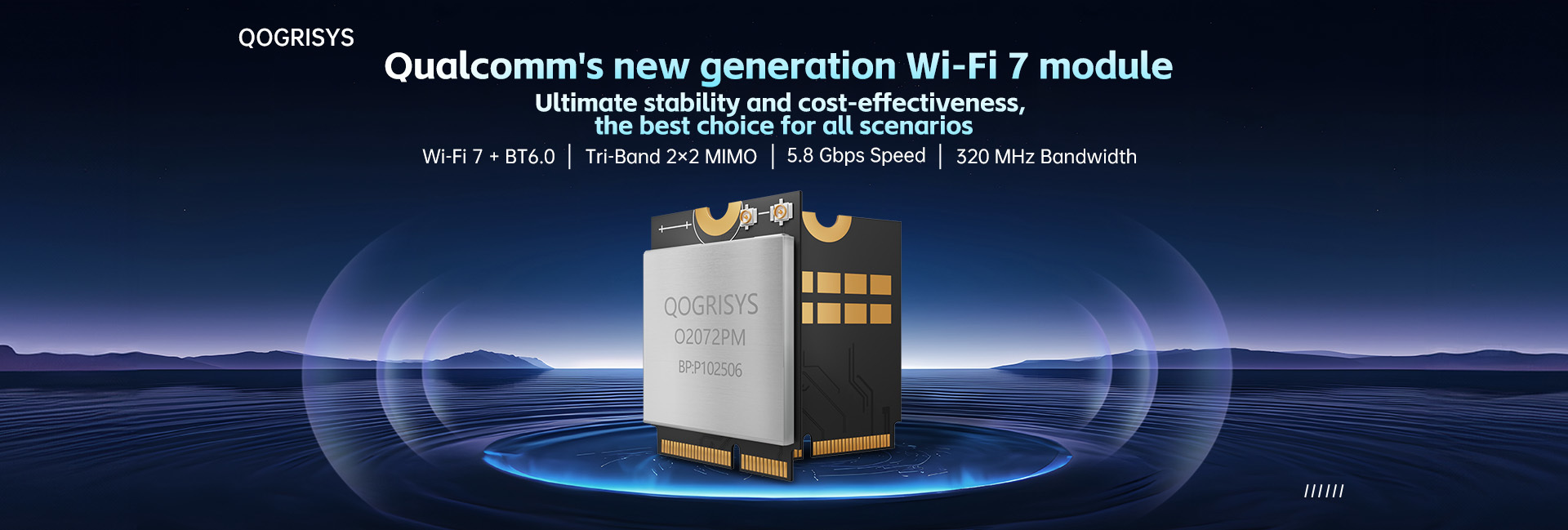
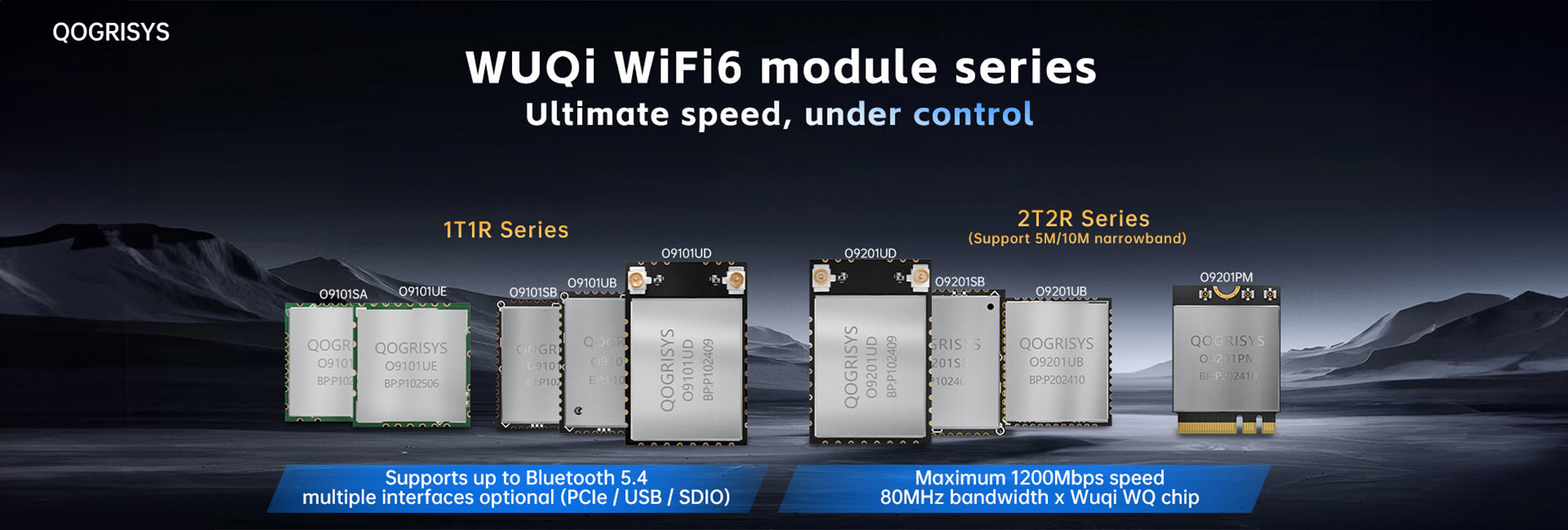
From August 26th to 28th, 2026, the 25th IOTE International Internet of Things Exhibition was grandly held at the Shenzhen World Exhibition & Convention Center (Bao'an New Hall) . With a massive exhibition area of 80,000 square meters, this year's exhibition brought together over 1,000 high-quality exhibitors from around the world, attracting 48,109 industry professionals and over 3,000 overseas visitors on the first day . The exhibition, themed "Edge Intelligence, Scenario Deepening, and Green Sustainability," was a major collaboration between AGIC 2026 Shenzhen International General Artificial Intelligence Industry Expo and GERX Global Embossed Intelligent Robot Industry Expo, achieving deep integration of IoT technology with general AI and robot intelligence .   The strongest signal released by this exhibition is that edge AI and wireless connectivity are moving from "evolving independently" to "deeply coupled". Hall 12 showcases top achievements such as AI chips, edge computing, and embodied intelligent robots , while Hall 10 focuses on industrial IoT and communication modules . The coordinated layout of the two halls itself constitutes a spatial interpretation of the "AI + connectivity" industrial logic. I. Industry Logic: Why "Connectivity" Must Embrace "Computing" The integration of edge AI and wireless modules is essentially a technological evolution driven by industry demands. The centralized model, which relies solely on cloud computing power, is encountering multiple bottlenecks: industrial control scenarios require millisecond-level response times, which cloud round-trip latency cannot meet; medical and security scenarios are highly sensitive to data privacy, and uploading data to the cloud poses compliance risks; and the continuous uploading of data by massive IoT devices is driving up bandwidth and cloud computing costs. The standard architecture for AI implementation is becoming one where the terminal handles perception, the edge handles inference, and the cloud handles training and coordination—each with its own specific role. This trend is clearly supported by data. According to a report released by IIM Information, the global wireless module market is expected to reach $48.62 billion in 2026, a 17.8% increase from $41.27 billion in 2025. Among these developments, the integration rate of AI-dedicated acceleration chips in modules continues to climb , and shipments of emerging AI edge inference modules (integrated NPU) exceeded 12 million units in the second quarter of 2026 , marking a shift in modules from simple transmission units to computing power nodes. Meanwhile, Wi-Fi 7 modules support 320MHz bandwidth and 4096-QAM modulation, and are expected to see significant adoption in routers, VR/AR devices, and other applications in 2026 . Wireless modules are evolving from "data transmission pipelines" to "intelligent connectivity bases" with local intelligent processing capabilities. The competitive logic of next-generation wireless communication modules is undergoing profound changes: from single Wi-Fi connectivity to Wi-Fi + Bluetooth + multi-protocol collaboration; from simply transmitting data to the integration of connectivity, sensing, and edge intelligence . II. IOTE 2026 Exhibition Confirms: Integration Has Become an Industry Consensus At IOTE 2026, leading global wireless connectivity companies clearly outlined the industry landscape of this trend through their respective product portfolios. From chip manufacturers to module solution providers, the core positions of their booths were generally occupied by edge AI-related solutions—whether it was a wireless SoC integrating AI/ML hardware accelerators or a main control platform for embodied intelligence and generative AI terminals, the strategic focus of leading players in the industry has clearly shifted towards dual-core capabilities of "communication + computing". Among the numerous innovative product awards presented concurrently with the exhibition, edge AI computing modules and high-performance AI chips occupied prominent positions. Several exhibitors showcased edge AI demonstration solutions supporting features such as local keyword wake-up and real-time face and gesture recognition. Meanwhile, the exhibition of supporting technologies such as high-precision wireless sensing and multi-protocol fusion further enriched the capabilities of wireless connectivity in AI scenarios. The exhibition clearly demonstrates that competition in the wireless connectivity field has evolved from a simple contest of "communication performance" to a comprehensive competition of "communication + computing" capabilities . Simply providing high-speed, stable data transmission channels is no longer sufficient to create a differentiated advantage. The ability to provide computing power support and intelligent collaboration for edge AI applications on top of connectivity capabilities is becoming a new benchmark for measuring the technological strength of module manufacturers. III. Application Scenarios: Where to Deploy Edge AI + Wireless Modules The integration of edge AI and wireless modules is being rapidly implemented in multiple vertical scenarios.   Industrial manufacturing is one of the most mature scenarios for the integration of edge AI and wireless modules. Hall 10 of the exhibition focuses specifically on industrial IoT and embedded solutions, connecting three major technology tracks: intelligent sensing, IoT communication, and precise positioning . In intelligent manufacturing scenarios, AGV/AMR autonomous transport vehicles, industrial sensors, and monitoring systems have rigid requirements for low-latency wireless connectivity and local AI inference capabilities. Wireless modules need to provide stable connectivity in high-interference industrial environments, while providing a communication foundation for AI applications such as visual inspection and predictive maintenance on the equipment side. Smart homes and smart buildings are another important scenario. In the smart home scenario, local AI processing means that voice commands can be responded to without being uploaded to the cloud, which reduces latency and protects user privacy—this is the core value of edge AI. Smart retail and smart cities also benefit from this trend. The exhibition comprehensively covered more than 20 core application scenarios, including smart logistics and smart consumption . In the smart retail scenario, AI POS terminals, smart vending machines, and other devices need to complete inference tasks such as image recognition and behavior analysis locally, while relying on wireless modules to achieve data synchronization and remote management with the cloud. Drones and robots represent emerging high-growth sectors. Drone solutions integrate Wi-Fi modules, 5G communication, and edge AI computing capabilities, supporting applications such as long-distance image transmission, remote control, real-time image recognition, and intelligent monitoring. With the rapid development of embodied intelligent robots, the demand for high-bandwidth, low-latency wireless connectivity and local AI inference capabilities will continue to surge. IV. Qogrisys's Solution Layout: A "Smart Connection Dock" with Wi-Fi 7 + Bluetooth 6.0 In light of this industry trend, the layout of QOGRISYS Technology Co., Ltd., headquartered in Shenzhen, is highly representative. Founded in 2014, Qogrisys Technology focuses on the communication connectivity industry, committed to providing customers with comprehensive IoT connectivity solutions. The company partners upstream with chip manufacturers such as Qualcomm, Realtek, Woogi, and HiSilicon, and downstream with end customers in smart home, industrial IoT, and automotive electronics sectors. Its main products cover 2.4G/5.8G Wi-Fi modules, BLE modules, PLC modules , RF antenna components, and smart hardware solutions. Core Product: O2072PM Wi-Fi 7 + Bluetooth 6.0 Combination Module Qogrisys has launched two Wi-Fi 7 + Bluetooth 6.0 combo modules, the O2072PM and O2072PB , based on the Qualcomm FastConnect C7700 (chip code QCC2072) chip . The QCC2072 is designed to provide ultra-high-speed connectivity, with peak speeds up to 5.8Gbps, and features a 320MHz channel, 4K QAM, and Multi-Link Operation (MLO) capabilities . The O2072PM uses an M.2 Key E standard interface (22×30mm) , fully supporting 4K QAM, 320MHz channels, and MLO (Multi-Link Operation), with a peak rate of 5.8Gbps . The Wi-Fi portion complies with IEEE 802.11a/b/g/n/ ac /ax/be standards, supporting tri-band 2.4 GHz/5 GHz/6 GHz, with each band supporting up to 4096 QAM modulation . The Bluetooth portion is compatible with Bluetooth 6.0, supporting dual-mode Bluetooth, Tx beamforming, MRC, LE Audio, and 2 Mbps Bluetooth Low Energy (BLE) . Of particular note is that the O2072PM also supports high-precision distance measurement (HADM/channel detection) , providing new technological possibilities for scenarios such as indoor positioning and asset tracking. The O2072PM is clearly designed to meet the "connectivity foundation" requirement in edge AI scenarios—providing stable, high-bandwidth, and low-latency wireless connectivity for high-performance edge platforms. With the continuous improvement of edge AI computing power, the low latency and high reliability of Wi-Fi 7 are becoming the core communication foundation for edge computing. The higher speed and lower latency offered by Wi-Fi 7 enable the module to achieve a better product experience across a wider range of devices . Domestic platform adaptation capabilities Qogrisys's foray into the Wi-Fi 6 field is also noteworthy. Its O9201 SB/ O9 1 01 SA/ O9201PM series modules have completed driver adaptation and verification on domestic platforms such as RK3588, Allwinner, and Rockchip, and can be widely used in industrial tablets, edge computing gateways, industrial control equipment, and other scenarios. This demonstrates Qogrisys's deep technical accumulation in adapting to domestic platforms and wireless connectivity. In terms of product portfolio, Qogrisys is building a complete wireless connectivity solution covering Wi-Fi 4/5/6/7 and BLE, following the path of "using a full hardware platform as the foundation and vertical scenarios as the direction" . V. Outlook: The Era of "Intelligent Connectivity" in the Module Industry Looking ahead to 2026-2030, the industry will enter the era of "intelligent connectivity." Edge AI modules have become a new growth engine for the wireless module industry. According to an IIM report, the global wireless module market is projected to exceed $90 billion by 2030, with edge AI and satellite direct connection modules expected to grow at a compound annual growth rate of over 30%. The deep integration of edge AI and wireless modules is not an optional "icing on the cake," but an inevitable path for industry development . For wireless module manufacturers, their ability to synergize with edge AI platforms beyond mere connectivity, and to provide a highly reliable communication foundation for edge AI applications, will determine their position in the next stage of competition. The IOTE 2026 exhibition showcases a true picture of this ongoing transformation—from "connecting everything" to "intelligently connecting everything." Qogrisys Technology, with Shenzhen as its origin, Wi-Fi 7 + Bluetooth 6.0 as its connectivity platform, and full-scenario coverage as its goal, is contributing its strength to this transformation.  

2026

08/31

Die Revolution der Zwei-Wege-Konnektivität in intelligent vernetzten Fahrzeugen: Von intelligenten Cockpits bis zur Ladeinfrastruktur
Intelligente vernetzte Fahrzeuge werden zu einem der wichtigsten Wachstumsträger der globalen Technologiebranche.   Die Produktion intelligenter vernetzter Fahrzeuge in China wird 2026 voraussichtlich 14,064 Millionen Einheiten erreichen, wobei sich die Marktdurchdringung auf 38,40% ausweitetVon 4,6915 Millionen Einheiten im Jahr 2021 auf 14,064 Millionen Einheiten im Jahr 2026 hat sich diese Zahl in nur fünf Jahren fast verdreifacht, was einer jährlichen Wachstumsrate von 24,8% entspricht.Die Umsätze aus intelligenten vernetzten Fahrzeuglösungen werden voraussichtlich 236.5 Milliarden Yuan. iiMedia Research zeigt, dass der Markt für intelligente vernetzte Fahrzeuganwendungsdienste in China bereits 2025 222,3 Milliarden Yuan erreicht hat. Auf globaler Ebene ist die Wachstumsbahn ebenso steil.Die Daten von Research and Markets zeigen, dass der globale Markt für vernetzte Fahrzeugtechnologie von 45,99 Milliarden Dollar im Jahr 2025 auf 51,86 Milliarden Dollar im Jahr 2026 wachsen und 84 Dollar erreichen wird.54 Mrd. bis 2030 mit einer jährlichen Wachstumsrate von 13%**Der breitere Markt für vernetzte Autos wird voraussichtlich von 105,67 Milliarden Dollar im Jahr 2025 auf 121,23 Milliarden Dollar im Jahr 2026 und weiter auf ** 214,42 Milliarden Dollar im Jahr 2030 mit einer CAGR von 15,3% wachsen.Laut TechNavio,Der globale vernetzte Automarkt wird voraussichtlich im Zeitraum 2025-2030 um 161,69 Mrd. USD wachsen und sich mit einer jährlichen Wachstumsrate von 17,2% beschleunigen. Kommunikations- und Navigationsterminals wechseln von Fahrzeug "Optionen" zu "Standardgeräten"Die Ansprüche an die Konnektivität intelligenter vernetzter Fahrzeuge erstrecken sich in zwei Richtungen:Innerhalb des Fahrzeugs, erfordern intelligente Cockpits eine drahtlose Verbindung mit hoher Bandbreite und geringer Latenzzeit; außerhalb des Fahrzeugs erfordert die Ladeinfrastruktur eine intelligente Kommunikation über die Stromleitungs-Trägertechnologie.Ofeixin Technology liefert eine vollständige Konnektivitätslösung, die sowohl die "Fahrzeugseite" als auch die "Energieseite" intelligenter vernetzter Fahrzeuge abdeckt, mit Wi-Fi 7 + Bluetooth 6.0 im Fahrzeug installierte drahtlose Lösungen und PLC-Ladestelle Kommunikationslösungen. I. Die Bandbreitenrevolution in intelligenten Cockpits: Wi-Fi 7 läutet eine neue Ära der Fahrzeugverbindung ein Wi-Fi 7, der Standard der nächsten Generation nach Wi-Fi 6, wird zur Kerninfrastruktur für drahtlose Verbindung in intelligenten Cockpits.Im Januar 2026 eröffnete die Wi-Fi Alliance offiziell die Wi-Fi 7-ZertifizierungVon der Eröffnung der Zertifizierung bis zur Lieferung der Modulmassenproduktion hat das Tempo der Kommerzialisierung dieser technologischen Iteration die Erwartungen des Marktes weit übertroffen. Die Wi-Fi-7-Module für die Automobilindustrie haben die AEC-Q104-Qualifizierung abgeschlossen und sind im vierten Quartal 2025 in die Versuchsproduktion für kleine Chargen eingetreten., mit theoretischen Spitzendatendatenraten, die 4,8 mal höher sind als bei Wi-Fi 6, und die Szenarien mit hoher Bandbreite wie High-Definition-Karten-Streaming-Updates und AR-Navigation im Fahrzeug signifikant unterstützen. Industry players have already demonstrated clear commercialization signals—LG Innotek has secured orders from a leading European automotive parts supplier to begin shipping automotive-grade Wi-Fi 7 and Bluetooth wireless communication modules in 2027, mit einem Auftragswert von etwa 68 Millionen Dollar. Der weltweite Markt für Wi-Fi/Bluetooth-Module im Automobilbereich soll 2026 4,28 Mrd. USD erreichen und bis 2030 6,83 Mrd. USD übersteigen..Wi-Fi-Module sind eine zentrale Beschaffungskategorie im Bereich intelligenter Cockpits geworden und machen 76% der Nachfrage nach Wi-Fi-Modulen ausDie Lieferungen von Single-Chip-Lösungen machten im Jahr 2025 42,5% des Gesamtvolumens aus und werden voraussichtlich im Jahr 2026 50% übersteigen.Die chinesische Inlandsnachfrage nach OEM-Beschaffungen für gleichzeitige Module mit zwei Bandbreiten wuchs im Jahr 2025 um 23% gegenüber dem Vorjahr, wodurch China der am schnellsten wachsende Binnenmarkt weltweit wird. Im Bereich der Wi-Fi 7-Automotive-Module hat Ofeixin Technology eine Flaggschiff-Produktpalette fertiggestellt.Die O2072PM (PCIe M.2-Schnittstelle) und die O2072PB (SMD-Version)sind Wi-Fi 7-Module für die Automobilindustrie, die auf dem Chipsatz QCC2072 (FastConnect C7700) von Qualcomm basieren. Beide Module entsprechen den IEEE 802.11a/b/g/n/ac/ax/be-Standards und unterstützen Tri-Band 2.4 GHz/5 GHz/6 GHz gleichzeitiger Betriebmit einer Bandbreite von 6 GHz bis 320 MHz undSpitzendatenraten von bis zu 5,8 Gbps. Beide Module unterstützenErweiterte Multi-Link Single Radio (eMLSR)und 2 × 2 Multi-User Multiple-Input Multiple-Output (MU-MIMO),die flexible Planung von Frequenzressourcen in Szenarien mit mehreren gleichzeitigen Verbindungen im Fahrzeug und komplexen Signalstörungen ermöglicht.Die O2072PM und O2072PB gehören zu den wenigen Modulprodukten auf dem Markt, die gleichzeitig Wi-Fi 7 und Bluetooth 6 unterstützen.0, wobei der Bluetooth-Bereich direkt Bluetooth 6 unterstützt.0 und Channel Sounding-Funktionalität, die eine vollständige technologische Grundlage für hochpräzise Positionsszenarien wie digitale Autoschlüssel bietet. II. Von der "Konnektivität" zur "Wahrnehmung": Bluetooth 6.0 definiert die Interaktion zwischen Mensch und Fahrzeug neu Die Bluetooth-Technologie wird von einem "Konnektivitätswerkzeug" zu einer "Wahrnehmungsinfrastruktur" umgebaut.Die Einführung der Channel Sounding-Technologie von Bluetooth 6.0 bringt die Fähigkeit zur Messung von Entfernungen mit hoher Präzision auf Zentimeterebene zu Bluetooth.. Channel Sounding kombiniert RTT (Rund-Trip Time) und phasenbasierte Messung, um eine hochpräzise Entfernungsmessung zu erreichen.die einen qualitativen Sprung vom Messfehler der traditionellen BLE-Lösungen darstellt, die auf RSSI (Received Signal Strength Indicator) basierten.Bluetooth Channel Sounding Technologie erreicht eine Genauigkeit innerhalb von 0,5 Metern mit Relais-Angriffsschutz, und wird die erste sein, die 2026 in digitalen Autoschlüsseln im Automobilbereich eingesetzt wird. Die Industrie-Lösungen sind bereits ausgereift. Quectel veröffentlichte im April 2026 seine digitale Schlüssellösung der nächsten Generation für Automobile mit BLE 6.0 + UWB + NFC-Tri-Mode-Fusion-Technologie.Yuanfeng Technology kündigte auch an, dass es die erste in der Branche sein wird, die einen Multi-Node Bluetooth 6 auf den Markt bringt..0 Technologie-Lösung für die Kanalsonde in der zweiten Hälfte des Jahres 2026.Branchendaten zeigen, dass im Jahr 2025 mehr als 13,2 Millionen Fahrzeuge standardmäßig mit digitalen Schlüsselfunktionen ausgestattet waren. Die jährlichen Auslieferungen von Bluetooth-Geräten sollen 2026 5,9 Milliarden Einheiten erreichen, wobei die jährliche Auslieferung für 2030 voraussichtlich 8,1 Milliarden Einheiten erreichen wird.Der Markt für Bluetooth 6.0 wurde 2025 auf 5,42 Milliarden Dollar geschätzt und wird voraussichtlich bis 2035 auf 17,47 Milliarden Dollar wachsen.Nutzung der etablierten Vorteile des Ökosystems, dringt in den Markt für Präzisionsbereiche ein, wobei von den Anwendungsverkäufern eine groß angelegte Einführung von der zweiten Hälfte 2026 bis 2027 erwartet wird. Die Module O2072PM und O2072PBvon Ofeixin Technology, mit ihrer integrierten Bluetooth 6.0-Funktionalität, bieten deutliche Vorteile bei digitalen Autoschlüsseln, Positionierung des Personals im Fahrzeug und anderen Szenarien.Beide Module unterstützen High Accuracy Distance Measurement (HADM), LE Audio, 2 Mbps Bluetooth Low Energy und andere vollständige Bluetooth-Funktionen. Bluetooth teilt eine Antenne mit 2,4 GHz WLAN und arbeitet gleichzeitig mit 5 GHz/6 GHz WLAN,Bereitstellung flexibler Konfigurationsmöglichkeiten für die Fahrzeug-Multi-Protokoll-Konkurrenz. Die Auslieferungen von Wi-Fi/Bluetooth-Combinationsmodulen erreichten im Jahr 2026 71% und sollen bis 2030 85% übersteigenDie Ofeixin-Lösung O2072PM/O2072PB ist ein repräsentatives Beispiel für diesen Trend.Bereitstellung intelligenter Cockpits mit einem integrierten "einheitlichen Netz", eine Lösung mit mehreren Möglichkeiten. III. Das "unsichtbare Kommunikationsnetzwerk" der Ladeinfrastruktur: PLCs Pflicht-Upgrade-Fenster In der industriellen Landschaft intelligenter vernetzter Fahrzeuge ist die Ladeinfrastruktur ein unverzichtbarer Bestandteil.Und die PLC-Technologie (Power Line Communication) entwickelt sich zur Kernlösung für die Kommunikation von Ladestellen für Elektrofahrzeuge.. Die EU-Vorschriften fordern eine umfassende Modernisierung der Kommunikationsmethoden für Ladestellen. Gemäß der Delegierten Verordnung (EU) 2025/656 der EU, die eine verbindliche Frist für die Einhaltung von 2027 festlegt, entwickeln intelligente Wechselstromladestellen der nächsten Generation, die der Norm EN ISO 15118-20 entsprechen:2022 ist der einzige Weg für Produkte auf den europäischen Markt geworden.Dies bedeutet, dass die traditionelle PWM-Kommunikationsmethode abgeschafft wird und ein vollständiger Übergang zur Hochschichtkommunikation auf der Grundlage der GreenPHY Power Line Communication (PLC) erfolgt.mit obligatorischer Integration von Plug & Charge (PnC) und Vehicle-to-Grid (V2G) -Funktionen. Der weltweite Markt für Power Line Communication (PLC) wird voraussichtlich von 12,74 Mrd. USD im Jahr 2025 auf 14,29 Mrd. USD im Jahr 2026 mit einer CAGR von 12,1% wachsen. Bis 2030 wird der Markt voraussichtlich 22,66 Mrd. USD erreichen.Erweiterung der Ladenetze für ElektrofahrzeugeMit dem Ausbau von Elektrifizierung, verteilten Energieressourcen, Ladevorrichtungen für Elektrofahrzeuge und Smart-City-Programmen wird die Zahl der Menschen in der Stadt zunehmen.PLC wird zu einer wichtigen Schicht im breiteren industriellen IoT- und Smart Grid-Kommunikationsökosystem. PLC-Kommunikation erfordert keine zusätzliche KommunikationsverkabelungDiese "Zwei-in-Eins"-Eigenschaft verleiht dem PLC einen natürlichen Vorteil bei Ladestellen-Szenarien:Direktverwendung bestehender Stromleitungen zur vollständigen Datenübertragung zwischen Fahrzeug und LadehebeAb dem 8. Januar 2026 müssen alle neu installierten oder deutlich aktualisierten öffentlich zugänglichen AC-Ladestellen EN ISO 15118-2 unterstützen:2016Das bedeutet, dass die PLC-Kommunikationsfähigkeit von einem "Nice-to-Have" zu einem "Must-Have" übergeht. Ofeixin Technology bietet ein komplettes Produktportfolio für PLC-Module.Der S130N-ISIist ein vollständig integriertes Power Line Communication-Modul, das auf der Grundlage des LianXinTong VC6330-Chip entwickelt wurde und ein 32-Bit-ARM Cortex M3 MCU, 32-Bit-DSP, eingebetteten Flash, 1 MB SRAM integriert,und reichhaltige KommunikationsschnittstellenDas Modul verwendet eine LCC-Verpackung mit ultra-kompakten Abmessungen und integriert Line Drivers auf dem Chip mit geringem Stromverbrauch und starker Lärmbekämpfung. In Ladestellen, Photovoltaikkommunikation und anderen SzenarienOfexinDas S130N-ISI-Modul ermöglicht eine zuverlässige Kommunikation der Geräte über bestehende Stromleitungen.- eine einzige Stromleitung, die gleichzeitig Strom und Daten liefert.Die Marktnachfrage nach PLC-Modulen in Ladestellen-Szenarien dürfte explosiv wachsen. IV. Vom Cockpit zur Infrastruktur: Die Connectivity Foundation von intelligenten vernetzten Fahrzeugen Intelligente vernetzte Fahrzeuge und das Internet der Fahrzeuge schreiten mit einer jährlichen Wachstumsrate von mehr als 30% voran.Die drahtlosen Kommunikationsmodule im Fahrzeug sind von "Hinter-die-Szenen-配角" zu "Core Hub" umgestellt worden. Auf der Seite des intelligenten Cockpits sind sie die Übertragungskanäle für die Interaktion mit mehreren Bildschirmen, die Positionierungsbasis für digitale Autoschlüssel, die einen schlüssellosen Zugang ermöglichen,und die Anschlusssicherung für OTA-Upgrades, um eine kontinuierliche Weiterentwicklung des Fahrzeugs zu gewährleistenAuf der Seite der Ladeinfrastruktur bilden sie den Grundstein für die Kommunikation und ermöglichen intelligente Funktionen wie Plug & Charge und V2G-Zwei-Wege-Lade. Ofeixin Technologies Fahrzeug-Konnektivitätslösungen bieten eine klare "Dual-Track"-Architektur: Auf dem intelligenten Cockpit und dem digitalen Schlüssel, dieO2072PM und O2072PBWir sind der Ansicht, dass wir in diesem Bereich eine wichtige Rolle spielen müssen.8 Gbps Spitzendatenrate unterstützt die hohen Bandbreitenanforderungen von HD-Video-Streaming auf mehreren Bildschirmen und AR-Navigation im FahrzeugBluetooth 6.0 Channel Sounding bietet eine zentimetergenaue Positionierungsgrundlage für digitale Autoschlüssel.2 versus SMD-Paket flexible Auswahlmöglichkeiten für verschiedene Fahrzeughardware-Architekturen bieten. Auf dem Gebiet der Ladeinfrastruktur, dieS130N-ISIund andere PLC-Modul-Produkte erfüllen die durch die neuen EU-Vorschriften vorgeschriebenen Anforderungen an die Modernisierung,Bereitstellung von GreenPHY PLC-Kommunikationsfunktionen, die den ISO 15118-20-Standards für Ladestellen entsprechen. Mit Partnerschaften mit Qualcomm und anderen führenden Herstellern von Originalgeräten für Chips verwandelt Ofeixin Technology die neuesten Chip-Plattformen rasch in massenfertigbare Modulprodukte.Von Wi-Fi 7 + Bluetooth 6.0 in-Fahrzeug drahtlose Lösungen zum Laden Stapel PLC Kommunikationslösungen, die volle Abdeckungermöglicht es Ofeixin, komplette drahtlose Modullösungen für intelligente vernetzte Fahrzeuge zu liefern, von der Fahrzeugverbindung bis zur Kommunikation der Infrastruktur.Dies stellt sowohl die Vollständigkeit des Produktportfolios als auch die Flexibilität dar, um unterschiedliche Szenarien und Anforderungen zu erfüllen.. Im Hinblick auf 2027-2030 dringen zusammengesetzte Kommunikationsmodule, die 5G-Zellfunk integrieren, allmählich in die Fahrzeugsegmente der mittleren und niedrigen Klasse ein.während softwaredefinierte Fahrzeugarchitekturen höhere Programmierbarkeit und Sicherheitsisolierung von Modulen verlangen.Die starre Nachfrage nach intelligenten Cockpits und autonomem Fahren für hohe Geschwindigkeiten und zuverlässige Datenverbindungen, kombiniert mit dem durch die EU-Ladestellenvorschriften geschaffenen obligatorischen Upgrade-Fenster,gemeinsam die langfristigen positiven Grundlagen sowohl der Märkte für drahtlose Kommunikation im Fahrzeug als auch für Ladeinfrastruktur-Kommunikationsmodule sicherstellen.  

2026

08/25

From Stunts to Delivery: How Communication Modules Are Becoming the Nervous System of Embodied AI at WRC 2026
On August 19, 2026, the 11th World Robot Conference (WRC) officially opened at the Beiren Yichuang International Convention Center in Beijing’s E-Town, running through August 23 under the theme “Human-Robot Symbiosis, Production-Demand Convergence.” The scale set new records: more than 300 exhibitors (up 36% year-over-year) presented over 2,000 exhibits, with more than 150 products making their global debut. More than 17,800 contestants from 26 countries are competing across the conference‘s robotics contests. If previous WRC editions were “technology showcases,” WRC 2026 is an “industrial acceptance test.” The most significant shift is structural, not cosmetic. The conference introduced four themed days — Launch Day (Aug 19), a first-ever Procurement Day (Aug 20), Developer Day (Aug 21), and Public Days (Aug 22–23). A dedicated pavilion gathered 49 centrally administered state-owned enterprises presenting 12 real-world application scenarios — one of the strongest procurement signals the Chinese robot industry has ever staged. As one observer put it: last year‘s WRC answered whether robots can work; this year the industry answers how well they work, how much they cost, who buys them, and whether they can be deployed at scale. I. WRC 2026 Signals: The “Acceptance Test” of Physical AI The signals from this year’s conference are clear and strong: the robotics industry is moving from “single-technology demonstrations” to a new phase of “technological innovation + industry-demand alignment + global collaborative governance.” Trend One: From “Muscle” to “Brain.” Goldman Sachs’ July 2026 research report explicitly noted that the industry’s center of gravity is shifting from “physical capabilities” to “intelligent decision-making.” On the WRC floor, the Beijing Humanoid Robot Innovation Center unveiled the Pelican-Unify 1.0 unified embodied model and the Tiangong Omni — a lightweight humanoid robot open platform designed for the embodied AI ecosystem. Xinghaitu demonstrated the application results of the world’s first end-to-end full-body control model. The industry consensus is forming: the ultimate competition in embodied intelligence is not in motors and joints, but in foundational models and the data flywheel accumulated through continuous interaction with the real physical world. Trend Two: From “Showing Off” to “Real Work.” On the exhibition floor, robots are doing real work rather than performing. The firefighting humanoid robot Linglong L2.0 can easily climb over rubble and stairs. Fourier’s GR-3 humanoid robot acts as an “intelligent butler assistant” in simulated home scenarios. Keenon Robotics’ XMAN series autonomously completes the entire coffee extraction process. As Li Tong, founder and CEO of Keenon Robotics, stated: “Whether robots can actually do real work is the essence of humanoid robot commercialization.” Trend Three: Accelerated Industry Chain Closure. IDC’s latest MarketGlance: China Embodied AI Robotics, 3Q26 report divides the current industry into six market segments: computing infrastructure, model algorithms, data engines, robot bodies, core components and infrastructure, and industry application agents. The four exhibition halls of WRC 2026 — Innovation, Exchange, Manufacturing, and Fun — precisely cover the complete chain from underlying technology and core components to finished robot applications. Guangdong sent 34 companies spanning the full robot supply chain, from upstream EVE Energy batteries and ORBBEC 3D vision sensors, through midstream CVTE control boards and Neoway 5G communication modules, to downstream UBTECH, Dobot, and LimX Dynamics full machines. II. Communication Modules: The Underestimated “Nervous System” When industry attention focuses on the “brain” (AI models) and the “body” (joints and actuators), a critical question emerges: connectivity is becoming a key factor in determining whether robots are truly deployable. If large models are the robot’s “brain,” then the communication network is its “nervous system” — this “brain” must process massive heterogeneous data from dozens of sensors distributed across the body within milliseconds, and issue synchronized instructions to actuators within microseconds. Whether humanoid robots or autonomous mobile robots (AMRs), actual deployment imposes unprecedented demands on wireless connectivity: ultra-low latency, ultra-high bandwidth, high reliability, and multi-device concurrency. Industry research indicates that the internal and external communication architectures of robots are facing unprecedented restructuring, with traditional industrial robot communication architectures approaching their physical limits. The market size for embodied AI robot-dedicated communication is expected to expand rapidly from $42 million in 2026 to approximately $300 million by 2030. More宏观 data confirms this trajectory. QYResearch shows that the global robot communication module market was approximately $8.12 billion in 2025 and is projected to reach $21.61 billion by 2032, with a compound annual growth rate of 15.1% from 2026 to 2032. Research institutions further point out that driven by market prosperity and chip specialization, communication modules will witness nearly RMB 10 billion in incremental growth. The value of the communication link is undergoing a structural reorganization — from “general industrial component” to “dedicated core component.” III. The Communication Module Ecosystem at WRC 2026 WRC 2026 clearly displays the complete ecosystem of robot communication modules. In wireless communication, Neoway Technology showcased its 5G communication modules for the midstream industry, demonstrating a rich portfolio of products and solutions for robot collaborative communication scenarios. Realtek Semiconductor exhibited its communication transmission chip integration solutions for humanoid and industrial robots, featuring Wi-Fi 8 2×2 and 5GHz 3T3R high-end wireless modules to ensure real-time protocol and high-speed data exchange between robots. The 34 Guangdong companies formed a complete closed loop from upstream power batteries and 3D vision sensors, through midstream control motherboards and 5G communication modules, to downstream finished robots. In control and communication integration, GigaDevice demonstrated joint module solutions based on GD32 series MCUs, compatible with CANopenNode protocol and equipped with CANFD and RS485 dual industrial buses. JWIPC and CVTE provided control motherboards and edge computing platforms. These highly integrated control solutions represent the typical application of PLC (Power Line Communication) technology in robot motion control — achieving precise, real-time joint control through industrial buses, which is the key neural pathway through which the robot’s “brain” commands its “body.” In perception and safety, ORBBEC demonstrated robot-dedicated 3D depth camera modules, while Lingsi Intelligent and Saigan Technology provided perception and safety modules. These modules constitute the robot’s “sensory system,” forming the foundation for environmental perception and safe interaction. IV. Qogrisys Business Portfolio: A Full-Stack Connectivity Foundation from Wi-Fi 7 to PLC In the industry landscape revealed by WRC 2026, the role of communication module suppliers is upgrading from “standard component providers” to “builders of robot nervous systems.” Qogrisys business portfolio precisely covers multiple critical dimensions of this transformation. Wi-Fi 7 Modules: High-Speed Neural Pathways for Embodied Intelligence. Qogrisys has launched Wi-Fi 7 module product lines for high-end robots and industrial equipment. Among them, the O2072PM, based on Qualcomm’s QCC2072 chip, is a Wi-Fi 7 + Bluetooth 6.0 tri-band 2×2 MIMO module supporting 2.4/5/6 GHz bands, with up to 320 MHz bandwidth across all bands, peak speeds of up to 5.8 Gbps, 4096-QAM modulation, and Multi-Link Operation (MLO) capabilities. Bluetooth supports BLE 6.0 and LE Audio. In addition, These performance metrics directly address the rigid demand for ultra-low latency and ultra-high bandwidth wireless connectivity in embodied AI robots. Bluetooth and Multi-Protocol Modules: The Foundation of Diverse Connectivity. Qogrisys‘ product portfolio covers 2.4G/5.8G/6G series Wi-Fi modules, Wi-Fi HaLow, Nearlink, and Bluetooth (BLE) modules. Its Bluetooth modules support the latest standards including BLE 6.0 and LE Audio. In robot scenarios, different communication protocols serve different connectivity needs — Wi-Fi carries high-bandwidth data backhaul, Bluetooth handles low-power device interconnection, and Wi-Fi HaLow is suitable for long-distance low-power scenarios. Multi-protocol parallelism has become a standard capability of robot communication modules. PLC Modules: The “Invisible Infrastructure” of Power Line Communication. In August 2026, Qogrisys has formed a complete technology matrix in the PLC domain. Its 3121N-H module, based on the HiSilicon Hi3121S chip, achieves a physical layer peak rate of 0.507 Mbit/s, with a single CCO supporting up to 200 STA nodes. The S130N-ISI module features an ultra-compact design measuring just 20.6 × 12.6 mm, integrating a 32-bit ARM Cortex-M3 MCU and a 32-bit DSP dual-core processor. The 3121N-L module is a fully integrated power line carrier communication module equipped with an external LD amplifier and transmitter function. The unique value of PLC technology lies in “where there is power, there is network” — using existing power lines in homes or industrial settings as the data transmission medium, walls, floors, or metal structures blocking the signal. Measured data shows that PLC-IoT end-to-end response latency is stable within 50 milliseconds, with communication success rates as high as 99.99%. In industrial and service scenarios where robots need to be deployed across floors and rooms, PLC provides a stable connectivity guarantee that wireless solutions cannot. Deep Customization Capability: From Modules to Solutions. Qogrisys‘ core R&D team has long the world’s leading wireless chip platforms including Qualcomm, Realtek, WUQI, and HiSilicon, accumulating full-stack experience from chip bring-up and RF calibration to mass production testing. In the trend of the module industry moving from standardization to deep customization, this capability enables the company to provide customized connectivity solutions for different robot form factors and application scenarios. V. Challenges and Opportunities: The Module Industry‘s “Acceptance Test” The industry trends revealed by WRC 2026 bring structural opportunities to the module industry — but challenges are equally. Supply chain pressure continues to intensify. In July 2026, the module industry experienced the most severe component price surge in recent years. PCB prices rose 10%-30%, crystal oscillators 10%-30%, inductors 30%-70%, and MLCCs 10%-70%. Packaging giant ASE officially announced price increases of up to over 20%. Passing down to the module segment, the BOM cost of every Wi-Fi/Bluetooth module is being passively pushed up. Industry report data shows that the industry‘s average gross margin in 2025 fell by 8 percentage points compared to 2024. The market side also faces divergence. Consumer IoT growth has significantly slowed, Wi-Fi 7 penetration is only 8%, and AI module shipments still account for single-digit percentages. Meanwhile, the U.S. FCC is推行 component-level bans, and EU compliance thresholds continue to rise. However, the explosive growth of the robotics industry is opening a high-value growth curve for the module industry. As IDC points out, the robotics industry is transitioning from technology demonstrations and point breakthroughs to product delivery, scenario deployment, and industrial collaboration. IDC‘s 2026 Global CEO Survey shows that 35.2% of CEOs rank Physical AI as a key new technology investment area to focus on over the next 12-24 months. At the opening ceremony, Vice Minister of Industry and Information Technology Xin Guobin stated that Chinese robotics enterprises’ revenue topped RMB 300 billion ($44.45 billion) in 2025, with average annual growth exceeding 20% over the past five years. In the first half of 2026, revenue reached RMB 165.5 billion, up 24.5% year-on-year. Ministry of Industry and Information Technology data shows that China‘s annual humanoid robot production is expected to exceed 100,000 units in 2026. Morgan Stanley has raised its 2026 domestic humanoid robot shipment forecast from 28,000 to 50,000 units, projecting 446,000 units by 2030. Every robot requires communication modules as its “nervous system” — this is not only growth in volume but also a leap in the value of communication modules per robot.     Conclusion WRC 2026 clearly declares to the world: the robotics industry has crossed the stage of “can we build it” and officially entered a new era of “can we use it well and sell it.” In this new era, communication and connectivity technology is no longer an “optional accessory” for robots, but a “core organ.” From the high-speed wireless neural pathways of Wi-Fi 7, to the invisible backbone of PLC over power lines, from the low-power interconnection of Bluetooth, to the wide-area coordination of 5G — the module industry is moving from behind the scenes to center stage, becoming a key force in defining the performance boundaries of robots. For module manufacturers, this is not just a market opportunity to supply components, but a strategic opportunity to deeply participate in and define the future form of robots by providing smarter, more integrated, and more reliable connectivity solutions. As robots move from “showing off” to “delivery,” the module industry is likewise welcoming its own “acceptance test.”  

2026

08/24